Why One-Hand Clock Practice Works for Beginners
Many children do not struggle with clock reading because they are lazy or careless. They struggle because an analog clock asks them to track two moving hands, two different jobs, and a shifting relationship between them all at once.
For many learners in the 5-10 age range, that is a lot to hold in mind on the first try. A simpler entry point inside the interactive teaching clock can make the lesson feel playable instead of overwhelming.
That is where one-hand practice helps. When one hand stays fixed, the child can build one time idea at a time before the full clock comes back into view.
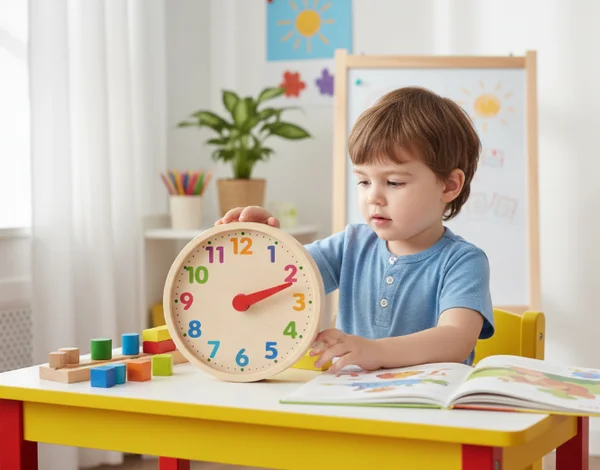
Why Two Moving Hands Can Feel Too Hard at First
A beginner is not only learning where the hour hand points. The child is also learning that the hour hand moves gradually, that the minute hand moves faster, and that both hands change meaning depending on where the other hand is.
That is a big visual puzzle. Some children respond by guessing. Others freeze, stare, or keep asking whether the answer is 'close enough.' None of that means they cannot learn it. It often means the task is carrying too many moving parts at once.
One-hand practice removes one layer of noise. It gives the child a smaller target and a cleaner success pattern.
What One-Hand Practice Is Really Teaching
Locking one hand is not a trick. It is a way to control the amount of information the child has to process during practice.
Locking the minute hand simplifies the hour concept
When the minute hand stays still, the hour idea becomes easier to see. The child can focus on where the short hand sits, how it moves from one number toward the next, and why it does not jump suddenly.
That kind of narrowed focus matches what an IES research project on visual scaffolding describes: visual scaffolding may support learning by helping students encode visual information more effectively. In simple terms, the child notices the right thing more clearly because less is competing for attention.
This is especially useful at the beginning of clock work. If a child can confidently read 3 o'clock, 4 o'clock, and 5 o'clock with one stable hand on the clock, the first piece of the system starts to feel trustworthy.
Locking the hour hand sharpens minute counting patterns
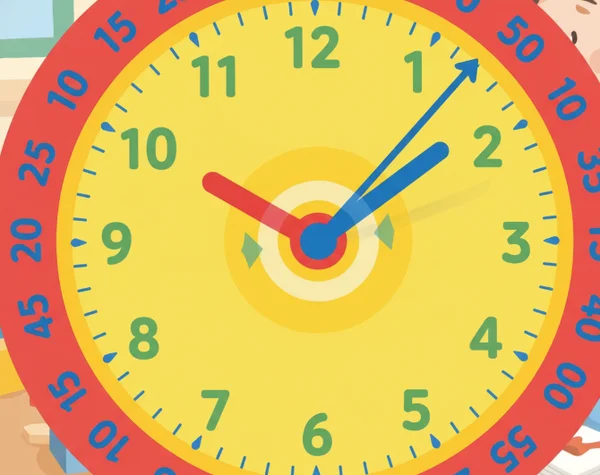
The reverse practice matters too. When the hour hand is locked, the minute hand becomes easier to study as a pattern instead of a distraction.
An IES article on virtual manipulatives says evidence indicates that screen-based versions offer several advantages. One benefit is that they combine features of manipulatives and drawings at the same time. That fits the clock well. The child can see the pattern, move the hand, and connect the visual jump from 5 to 10 to 15 without losing the rest of the display.
This is where children begin to feel the rhythm of the clock. Five-minute intervals stop looking like random numbers and start looking like a repeatable path around the circle.
When to Use One-Hand Practice at Home or in Class
One-hand practice is not needed forever. It is most useful as a bridge between total confusion and full-clock independence.
Use it when a child freezes or guesses wildly
If a child keeps blurting out answers, mixing up the two hands, or giving up before trying, the full clock may be arriving too soon. One-hand practice can lower the pressure without lowering the learning target.
It is also useful after a wrong answer that seems more rushed than thoughtful. Instead of correcting the whole clock, narrow the problem. Ask the child to watch only one hand for the next 3 examples.
That small shift often changes the mood of the lesson. Success becomes visible faster, and the child can build confidence on one concept instead of failing at two concepts at once.
Use it before full-clock quizzes and games
A full-clock game works better after the parts feel stable. An IES practice guide summary says systematic instruction introduces math concepts gradually and in a logical order, with many chances to apply the new idea. That is a useful model for clock practice too.
Teach one hand first. Let the child say the pattern aloud. Give several short repetitions. Then bring the second hand back only after the first idea feels steadier.
This order does not slow learning down. It usually speeds it up because the child is not relearning the same confusion every round.
A Simple One-Hand Routine with the Interactive Clock
A useful routine does not need a long lesson plan. A short, repeatable pattern is enough.
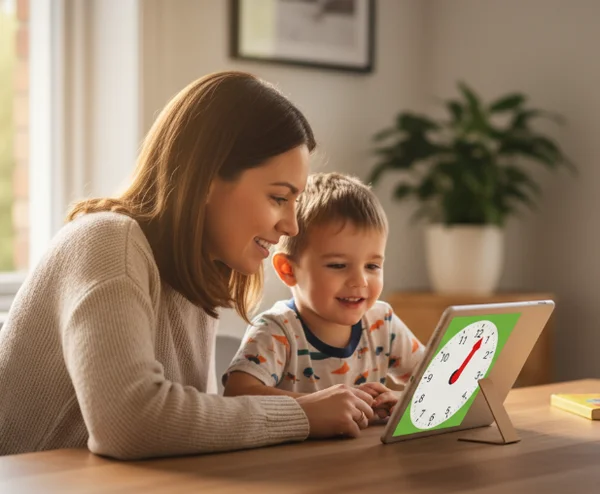
Start with three easy times and say them aloud
Begin with 3 easy examples. If the minute hand is locked, use whole hours. If the hour hand is locked, use 5-minute jumps. Say each answer aloud before moving the hand again.
This works especially well in a 3-minute practice round. The short time limit keeps the lesson light, and the repeated structure helps the child know what to expect.
The clock playground supports this kind of repetition well because the adult can reset the clock quickly without switching tools or printing anything.
Add the second hand only after the first pattern feels steady
Do not rush back to the full clock after one correct answer. Wait until the child can get several tries right without guessing.
Then add the second hand back in and keep the first round simple. Use known times first. Only after that should you move into random practice or hide the digital support.
This step matters because the goal is transfer, not surprise. The online analog clock becomes much more effective when each added feature arrives after a child has one stable idea to stand on.
Next Steps for Calmer Clock Practice
One-hand practice works because it makes the clock smaller without making the learning smaller. It helps children notice one pattern clearly, feel success faster, and return to the full clock with less confusion.
That makes it useful for both home practice and classroom warm-ups. It is simple, repeatable, and easy to adjust for the child's current level.
When the clock stops feeling like two moving problems at once, beginners often become more willing to keep going. That is usually the moment real time-reading progress starts.