Teaching Kids Analog Clocks: Age Milestones & Activities
As a parent or teacher, you’ve likely asked yourself: When is the right time to teach my child how to read an analog clock? In a world filled with digital screens, the traditional clock face can seem like a complex puzzle. But learning to tell time this way is a crucial milestone that builds math skills, spatial reasoning, and a deeper understanding of time itself.
This guide will walk you through the key developmental stages for learning to tell time. We'll explore age-appropriate activities and show you how to make the process fun and stress-free. With the right approach and a little help from interactive tools, you can turn this learning challenge into a joyful adventure. Get ready to explore a world of hours, minutes, and hands-on fun with our fun clock playground.
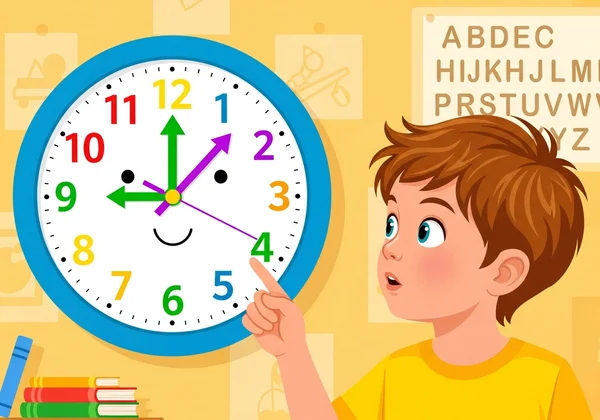
Understanding Child Readiness for Analog Clock Skills
Before you jump into teaching minutes and hours, it's important to know if your child is ready. Pushing them too early can lead to frustration for everyone. Readiness isn't about a specific birthday; it's about having a few foundational skills in place.
Most children show readiness when they can recognize numbers and understand simple sequences. If they can count and know what comes "before" and "after," they have the building blocks needed to understand a clock face. Patience is key—every child learns at their own pace.
Early Foundations: Pre-Clock Skills for Ages 3-4
For preschoolers, the goal isn't to read a clock but to build an awareness of time. At this age, you can introduce basic concepts that will make learning to tell time much easier later on.
Focus on the language of time in your daily conversations. Use words like:
- Sequence: "First, we'll put on your shoes, and then we'll go to the park."
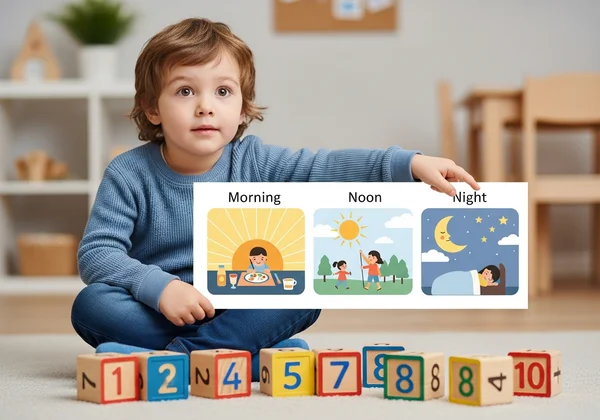
- Routine: "We eat breakfast in the morning and read stories at night."
- Duration: "We have a short time to play before dinner."
Another crucial skill is number recognition. Help your child comfortably identify numbers 1 through 12. You can practice this by counting toys, reading numbered books, or pointing out numbers you see throughout the day. These simple activities lay the groundwork for understanding the twelve hours on a clock.
The 'Aha!' Moment: Grasping Basic Time at Ages 5-6
Around ages five and six, many children are developmentally ready for their big "aha!" moment. They can typically count to 60, understand that numbers represent quantities, and are ready to connect these concepts to the clock.
This is the perfect time to introduce the physical clock. Explain its parts in simple terms. You can say the clock has a "face" with numbers and two "hands" that point to them. Distinguish between the short hour hand and the long minute hand. To make it even clearer, you can call them the "slow hand" (hour) and the "fast hand" (minute). This is when interactive learning becomes incredibly powerful.
Age-Specific Strategies & Fun Activities for Teaching Time
Once your child is ready, you can start teaching them how to read the clock. The best way to do this is by breaking it down into small, manageable steps. By matching the activities to their developmental stage, you can keep them engaged and build their confidence.
Playful Learning for Ages 3-4: Simple Clock Games
At this age, it's all about play. Use a toy clock or a simple drawing. Forget the minute hand for now and focus entirely on the short hour hand.
Create a "daily schedule" game. Ask, "What time do we eat lunch?" If you eat at 12, help them move the hour hand to the 12. Ask, "What time is bedtime?" and move the hand to the 8. This connects the abstract number on the clock to a concrete, familiar event in their day, making the concept of "o'clock" meaningful.
Mastering Hours & Half-Hours with Interactive Tools (Ages 5-6)
For kindergarteners and first graders, you can introduce the minute hand and the concepts of "o'clock" and "half-past." This is where a hands-on tool is essential. While physical clocks are great, an online tool offers immediate feedback that fascinates children.
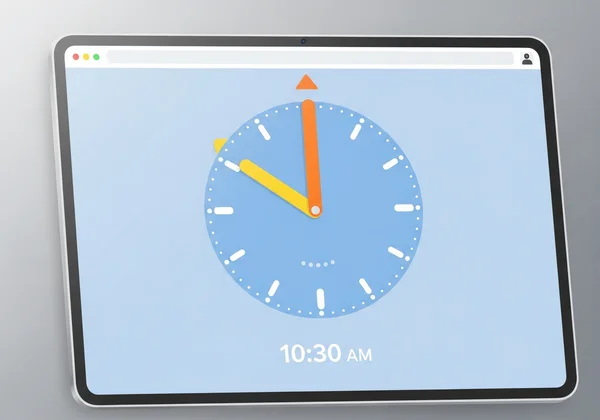
With our interactive clock, you can let your child drag the red minute hand! They’ll gasp as the digital time updates live—making learning stick. Let them drag the hand all the way to the 12 and see the digital display show ":00." Explain that this is "o'clock." Then, let them move the minute hand to the 6 and see ":30," explaining this is "half-past." The ability to move the hands themselves and see the immediate result helps solidify their understanding in a way that static worksheets cannot.
Tackling Minutes, Quarters, and Beyond (Ages 7-8+)
Once a child has mastered hours and half-hours, they are ready for the final frontier: counting the minutes. This is often the trickiest part, but it's also a fantastic way to practice math.
-
Count by Fives: Explain that the numbers on the clock also represent minutes. Point to the 1 and say "5 minutes," point to the 2 and say "10 minutes," and so on. Practice counting by fives around the clock together.
-
Introduce Quarters: Relate the clock to a pizza or a pie. Show them that when the minute hand is on the 3, it's a "quarter past" the hour. When it's on the 9, it's a "quarter to" the next hour.
-
Practice Makes Perfect: Use an online tool to reinforce these concepts. The "Random Time" feature can generate new challenges, while the "Hide Digital Time" button allows your child to test their knowledge and then check the answer. These game-like features make it fun to practice with challenges over and over again.
Why Analog Clocks Still Matter in a Digital World
In an age of smartphones, some question if analog clocks still matter. The answer? Absolutely! They unlock unique cognitive benefits.
Building Foundational Math & Life Skills
Reading an analog clock is a practical application of essential math concepts. It reinforces counting by ones, fives, and fifteens. It also provides a visual introduction to fractions like quarters and halves.
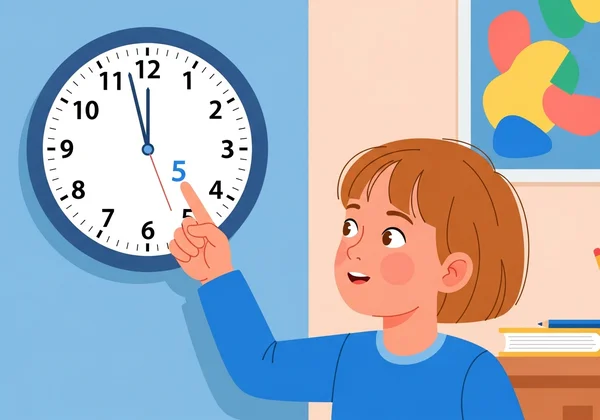
Beyond math, it teaches crucial life skills. Understanding an analog clock helps children develop time management and planning abilities. Kids learn to 'see' time passing. Watching the minute hand glide from snack time (3) to school time (6) builds real time-management skills.
Visualizing Time: Enhancing Spatial Reasoning & Understanding
Unlike a digital clock that just presents numbers, an analog clock provides a visual representation of time as a continuous cycle. Children can physically see the passage of time as the hands move. They can visualize how much time is "left" until an event, a concept that is very abstract on a digital display.
This spatial understanding helps build a stronger, more intuitive sense of time. It allows children to better grasp concepts like "15 minutes from now" or "in half an hour" because they can picture the hands moving around the clock face. This skill is valuable for everything from planning their day to solving complex problems later in life.
Empowering Your Child's Time-Telling Journey
Teaching a child to read an analog clock is a journey, not a race. It begins with building a simple awareness of time and progresses through stages of understanding, from hours and half-hours to the complexities of minutes. By using age-appropriate strategies and keeping the process playful, you can empower your child with a skill that will benefit them for a lifetime.
Remember to be patient, celebrate small victories, and make learning an interactive experience. The most effective way to learn is by doing, and a hands-on tool can make all the difference.
Watch their confidence soar as they drag the clock hands themselves—try our toy-like tool for free today!
Common Questions About Kids & Analog Clocks
What age should a child be able to read an analog clock?
There is no "perfect" age, as every child develops differently. Most children are ready to learn basic concepts like "o'clock" around ages 5-6. They typically master reading time to the nearest minute between ages 7 and 8. The key is to look for signs of readiness, like number recognition and an understanding of daily routines.
How do you explain the hour and minute hand to a child?
Use simple, memorable analogies. You could say the short, blue hour hand is like a slow tortoise—it moves carefully from one number to the next. The long, red minute hand is like a fast rabbit—it zips all the way around the clock in one hour. Using colors and characters makes the hands distinct and easier to remember.
Are analog clocks better for learning?
Yes, for developing a conceptual understanding of time. While digital clocks are convenient for getting a quick reading, analog clocks help children visualize time's flow, its cyclical nature, and its relationship to fractions (like quarters and halves). This visual learning helps build stronger foundational time and math skills.
How can I make learning to tell time fun and engaging for my child?
Turn it into a game! Connect telling time to your child's favorite daily activities, like "snack time" or "playtime." Use positive reinforcement and celebrate their progress. The best way to keep them engaged is to use hands-on tools. A colorful, interactive tool like our clock playground can transform learning from a chore into an exciting game.