Master Clock Reading: A Child's Learning Journey
The frustration of teaching a child to read an analog clock is a common challenge for parents and educators alike. Have you ever pointed to a traditional clock only to see your child’s face fill with confusion? Children often struggle to understand how the hour and minute hands work together. They might also find it difficult to convert between analog and digital time. This confusion goes beyond simple misunderstanding—it can affect their daily routines and independence.
Learning to tell time is a milestone that marks a transition from early childhood into a world of schedules and routines. However, the circular nature of a clock face and the dual meaning of numbers can be overwhelming. This comprehensive guide provides a structured learning path that breaks down time-telling into manageable stages. By following this journey, you can help your child track progress and build confidence at each step. To make this process even smoother, you can try our free tool to provide the hands-on practice your child needs to succeed.
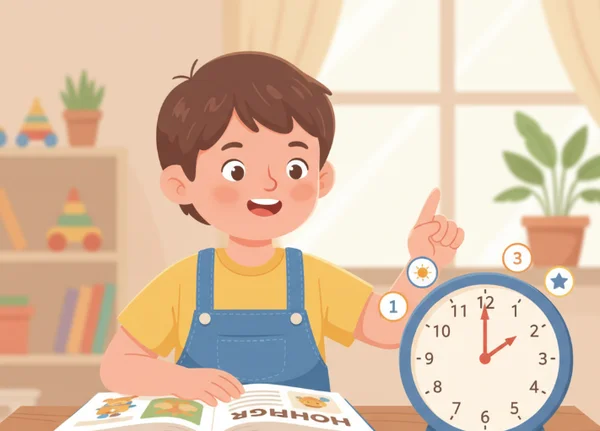
Understanding the Developmental Timeline of Time-Telling
Before diving into the "how," it is essential to understand the "when." Time is an abstract concept. Unlike a toy they can hold or a color they can see, time is something felt and measured. Children develop the cognitive structures to understand this measurement at different rates.
Cognitive Readiness: When Children Can Understand Time Concepts
Most children begin to show an interest in time around age five or six. At this stage, they understand the general parts of a day—morning, afternoon, and night. However, the ability to read a teaching clock usually requires a few specific cognitive foundations. First, the child must be able to count confidently to 60. Second, they need a basic understanding of "skip counting" by fives, which is usually a first or second-grade skill.
By age seven, most children are ready to master the basics of hours and half-hours. By age eight or nine, they can typically handle the precision of minutes and the concept of "quarter-to" or "quarter-past." Knowing where your child stands on this timeline helps you set realistic expectations and reduces the pressure to perform.
Common Challenges in Time-Telling Development
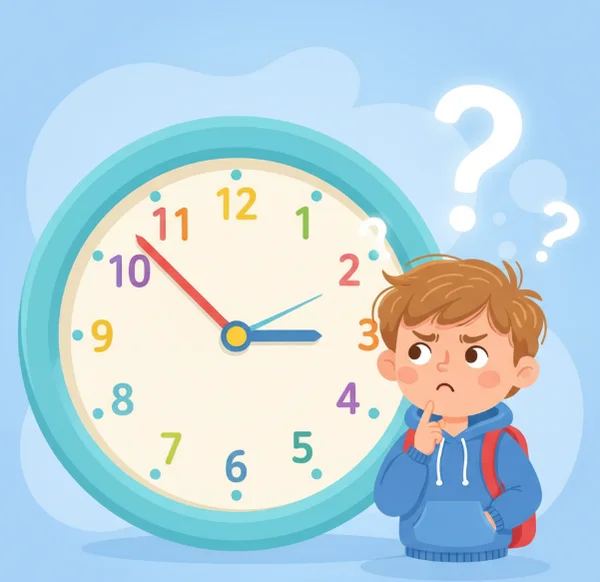
Why is an analog clock so much harder to read than a digital one? One major hurdle is the "double meaning" of the numbers. On a clock, the number '1' also represents '5 minutes.' This requires a high level of mental flexibility.
Another challenge is the movement of the hands. Children often struggle to realize that the hour hand moves slowly toward the next number as the minute hand spins. They might see the hour hand between 2 and 3 and feel unsure which hour it belongs to. Recognizing these hurdles allows you to address them specifically rather than just repeating the same instructions. Using a learning clock helps visualize these movements in real-time.
A Stage-by-Stage Learning Path for Analog Clock Mastery
Teaching all concepts at once leads to frustration. Instead, use a structured approach where each new skill builds on the previous one. Here is how you can break the process down into four distinct stages.
Stage 1: Introduction to Clock Components and Basic Recognition
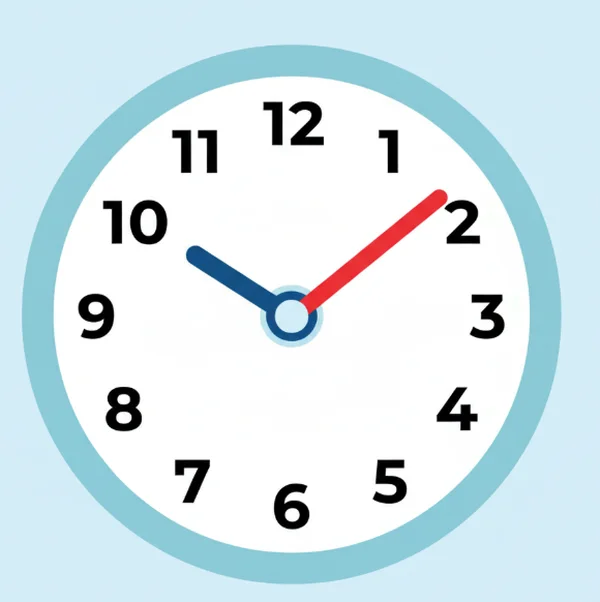
The first step has nothing to do with telling the time and everything to do with understanding the tool. Start by identifying the "Clock Face" and the two main hands. In our interactive tool, we use a blue hour hand and a red minute hand to help children distinguish between them easily.
Teach your child that the short hand (hour hand) is the "boss" of the big numbers, and the long hand (minute hand) is the "boss" of the minutes. You can spend a few days just pointing at the hands and asking, "Which one is the hour hand?" This stage is about building familiarity. Once they can identify the components, they are ready to move forward.
Stage 2: Hours and Half-Hours: The First Time-Telling Milestone
Once the parts are known, start with the easiest time to read: the "o’clock." Focus exclusively on when the minute hand points straight up at the 12. Use an interactive clock to let your child drag the hour hand around while keeping the minute hand on the 12.
After they master "o'clock," introduce "half-past" (the 30-minute mark). Explain that "half-past" means the minute hand has traveled halfway around the circle. This is a great time to show how the hour hand is now exactly halfway between two numbers. This visual cue is vital for preventing future confusion.
Stage 3: Quarter Hours and Five-Minute Intervals
This is where skip counting becomes the hero of the story. Introduce the "quarter-past" (15 minutes) and "quarter-to" (45 minutes) marks. Relate these to a pizza or a pie cut into four slices. This helps the child visualize the clock as a whole that can be divided.
Next, teach them to count by fives. Start at the 12 and move the minute hand to the 1, saying "five." Move to the 2 and say "ten." Repeat this until they can circle the clock confidently. Our tool's "Random Time" feature is perfect here; it can generate various five-minute intervals for the child to identify. You can practice challenges together to make this feel like a game rather than a chore.
Stage 4: Minute-by-Minute Precision and Time Duration
The final stage is the most detailed. Here, children learn to read the tiny tick marks between the big numbers. This requires fine motor skills if they are using a physical clock, but on a digital interface, it is much easier to see.
At this stage, you should also introduce the concept of duration. Ask questions like, "If it is 3:10 now, what time will it be in 15 minutes?" This moves the child from simply "reading" a display to "understanding" time as a passing resource. Mastery of this stage means they can confidently handle any analog clock for kids or adults.
Activities and Tools to Support Each Learning Stage
To keep the journey engaging, you must mix theory with play. Static worksheets have their place, but interactive and real-world applications are where the real learning happens.
Hands-On Clock Manipulation Practice
The most effective way to learn is by doing. Physical clocks are great, but they can be fragile or difficult to reset. An online teaching clock allows for infinite mistakes and instant corrections.
Encourage your child to "set the time" for their favorite daily activities. Ask them, "Can you show me what time we have lunch?" or "Move the hands to show when you go to bed." This hands-on manipulation builds a bridge between the abstract numbers and the child's actual life. When children move the hands and see the digital time update instantly, they get immediate feedback. This helps them correct their own mistakes as they learn.
Digital-to-Analog Translation Exercises
We live in a world full of digital displays—on ovens, tablets, and car dashboards. However, school curricula still prioritize analog reading because it teaches the "base-60" system better than digital does.
To bridge this gap, play a translation game. Look at a digital clock and ask your child to replicate that time on an analog interface. Use the "Hide Digital Time" feature on our website to test their skills. They can set the analog hands, guess the time, and then click "Show Digital Time" to see if they were right. This turns a difficult lesson into a satisfying "reveal" game.
Games and Real-World Time-Telling Scenarios
Make time-telling part of your daily "scavenger hunt." When you are out at a library or a train station that has a traditional clock, ask your child to read it. At home, you can play "Time Bingo" or "Beat the Clock."
Another great activity is "Time Manager." Give your child the responsibility of telling you when it is time to leave the house or start a movie. When they feel like they are in charge of the time, they are much more motivated to read the clock accurately. You can use our fun tools to simulate these scenarios during practice sessions at home.
Success Through a Structured Path
Teaching your child to read time can actually be fun and rewarding! With the right approach, you'll see those 'aha' moments when the clock finally makes sense. Breaking time-telling into smaller stages helps children feel more confident. This approach reduces any anxiety they might feel about learning to read clocks.
Follow this developmental approach and use specific activities for each stage. This method will help your child or students progress from beginner to confident time reader. Ready to get started? Head over to our Analog Clock Playground where your child can practice each step we've discussed through hands-on exploration!
The Takeaway
At what age should children start learning to tell time?
Most educators recommend introducing the basic concepts of an analog clock between the ages of 5 and 6. However, full mastery of minutes and duration usually occurs between ages 7 and 8. It is best to start when the child can count to 60 and understands the basic routine of their day.
How long does it typically take for a child to master analog clock reading?
The timeline varies, but with consistent practice, a child can often learn the basics within a few weeks. Achieving full precision usually takes several months of reinforcement. Using an interactive clock for just 10 minutes a day can significantly speed up this process.
What should I do if my child is struggling with a particular stage?
If your child gets stuck, it is usually a sign to go back one step. For example, if they struggle with five-minute intervals, return to practicing skip counting or "half-past" concepts. Using visual aids, such as the color-coded hands on our teaching clock, can also help clear up confusion between the hour and minute hands.
Is it better to teach analog or digital time first?
While digital time is easier to "read," analog time is better for "understanding." Analog clocks provide a visual representation of how much of an hour has passed, which helps with spatial reasoning and math skills. Most experts suggest teaching them concurrently or starting with analog to build a deeper conceptual foundation.
How can I make time-telling practice more engaging for my child?
The best way to engage a child is through gamification. Use challenges, rewards, and interactive tools. Instead of "studying," tell them you are going to play a clock playground game. When the learning feels like a game, the child’s natural curiosity takes over, making the educational process much more effective.