아날로그 시계 만들기 공예: 재미있는 실습형 시간 학습
오늘날 디지털 세상에서 자녀에게 전통적인 시계 읽는 법을 가르치는 것은 벅찬 작업처럼 느껴질 수 있습니다. 대부분의 아이들은 태블릿, 전화기, 심지어 전자레인지에서도 디지털 숫자에 둘러싸여 있습니다. 디지털 편리함과 아날로그 시계 읽기라는 필수 기술 사이의 격차를 어떻게 좁힐 수 있을까요? 많은 부모와 교육자들은 시간이 평평한 화면에서 추상적인 개념으로 남아 있을 때 아이들이 어려움을 겪는다는 것을 알게 됩니다.
성공의 비결은 다감각적 접근에 있습니다. 물리적인 "직접 만지는" 활동은 학습을 구체화합니다. 디지털 도구와 함께 즉각적인 재미를 더하세요—별도 설정이 필요 없습니다! 이 가이드에서는 창의적인 공예와 실제 연습을 사용하여 시계 읽기를 마스터하는 방법을 탐구합니다. 오프라인 활동을 우리의 온라인 도구와 결합하여 완전한 교육 경험을 만드는 방법을 보여드리겠습니다.
교실 영감을 찾는 교사이든 집에서 자녀를 돕는 부모이든, 이 전략들은 효과가 있습니다. 물리적 모델에서 대화형 시계 놀이터로 이동함으로써 어린이들은 시간과 분이 어떻게 함께 움직이는지에 대한 더 깊은 이해를 발전시킵니다. 시계 공예와 대화형 학습의 세계로 뛰어들어 봅시다.
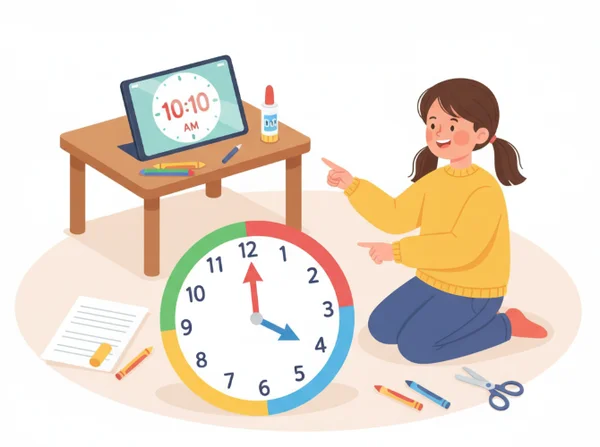
촉각 학습을 위한 종이 시계 만들기
아날로그 시계를 이해하는 첫 단계는 하나를 만드는 것입니다. 아이들이 학습 도구 구축에 참여할 때, 그들은 소유감을 느낍니다. 촉각 학습—또는 접촉을 통한 학습—은 5세에서 8세 사이 어린이에게 매우 강력합니다. 이것은 그들이 선형 디지털 디스플레이에서 종종 상실되는 시간의 원형적 특성을 시각화하는 데 도움을 줍니다.
아이들이 시계를 만들 때, 그들은 손이 움직이는 것을 느끼고 숫자 사이의 간격을 볼 수 있습니다. 이 직접 만지는 과정은 근육 기억을 구축합니다. 복잡한 수학으로 뛰어들기 전에, 아이가 시계 기능을 만드는 모양과 숫자로 놀게 하세요.
DIY 인쇄 가능한 시계 템플릿
시작하는 가장 쉬운 방법 중 하나는 간단한 종이 접시나 인쇄 가능한 템플릿을 사용하는 것입니다. 온라인에서 많은 무료 템플릿을 찾을 수 있거나, 튼튼한 두꺼운 종이에 직접 하나 그려도 됩니다. DIY 인쇄 가능한 시계 템플릿은 1부터 12까지의 숫자에 대해 깨끗하고 체계적인 레이아웃을 제공하기 때문에 훌륭합니다.
템플릿을 설정할 때, 아이가 숫자를 직접 쓰도록 장려하세요. 이것은 그들이 "기준" 숫자의 위치를 인식하는 데 도움이 됩니다: 12, 3, 6, 9. 우리의 대화형 시계 도구의 색상 코딩과 일치시키기 위해, 짧은 시침에는 파란색 크레용을, 긴 분침에는 빨간색 크레용을 사용해 보세요. 이러한 일관성은 아이가 종이 공예와 디지털 버전 사이를 전환하는 것을 훨씬 쉽게 만듭니다.
종이 고정핀으로 움직이는 시계 바늘
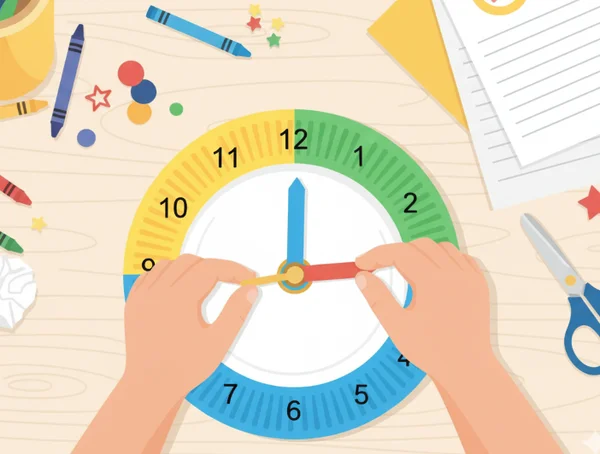
시계가 바늘이 움직이지 않으면 별로 쓸모가 없습니다. 공예를 기능적으로 만들려면 작은 금속 종이 고정핀(브래드라고도 함)이 필요합니다. 종이 접시 정확한 중심에 작은 구멍을 뚫으세요. 그런 다음 두 개의 종이 바늘 밑면에 구멍을 뚫습니다. 움직이는 시계 바늘을 짧은 시침이 위에, 긴 분침이 아래에 오도록 겹쳐 놓습니다.
고정핀이 제자리에 있으면, 아이에게 바늘이 어떻게 움직이는지 보여주세요. 실제 생활에서는 다른 속도로 움직이지만 "연습 모드"에서는 원하는 곳으로 움직일 수 있다고 설명하세요. 이것은 "시계 방향" 운동 개념을 소개하기에 좋은 시간입니다. 아이에게 바늘을 돌리고 임의의 위치에서 멈추게 하세요. 그런 다음 숫자가 무엇을 나타내는지 추측하게 하세요. 이 물리적 조작은 대화형 시계를 사용하여 더 고급 훈련을 하기에 완벽한 전주곡입니다.
시간 보물 찾기와 실제 연습
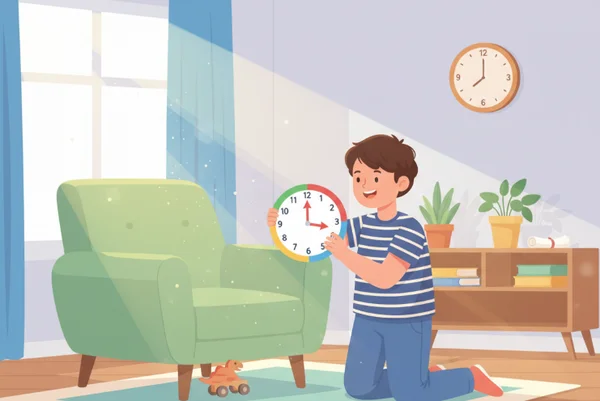
자녀가 시계의 물리적 레이아웃을 이해하면, 그 지식을 실제 세계로 가져갈 시간입니다. 오프라인 시계 활동은 어린이들이 시간이 단순한 학교 과목이 아니라 일상 생활의 일부임을 보게 합니다. 시계를 가장 좋아하는 활동과 연결함으로써 "지루함" 요소를 제거하고 흥미로움으로 대체합니다.
실제 적용은 대부분의 아이들이 "아하!" 순간을 경험하는 곳입니다. 그들이 "오후 3시"가 간식 시간을 의미한다는 것을 깨닫을 때, 시계의 숫자가 갑자기 매우 중요해집니다. 게임과 일정을 사용하면 혼란스러운 수업을 보람 있는 도전으로 바꿉니다.
시간 기반 보물 찾기 만들기
시간 기반 보물 찾기는 아이들이 활동적으로 지내면서 배울 수 있는 환상적인 방법입니다. 아이에게 "시간 단서" 목록과 종이 시계를 주세요. 예를 들어, 하나의 단서는 "오전 8시에 아침을 먹는 곳에서 숨겨진 장난감을 찾으세요"라고 말할 수 있습니다. 아이는 종이 시계를 오전 8시로 설정한 다음 부엌으로 가서 상을 찾아야 합니다.
그들이 향상됨에 따라 난이도를 높일 수 있습니다. "다음 단서는 30분 후에 있을 곳에 숨겨져 있습니다"라고 말해 보세요. 이것은 그들이 시간의 흐름에 대해 생각하도록 장려합니다. 막히면 언제든지 교육용 시계를 사용하여 분침의 움직임을 시각화할 수 있습니다. 이 게임들은 손 읽기라는 "무서운" 작업을 재미있는 퍼즐로 바꿉니다.
일일 일정 시계 활동
아날로그 시계를 중심으로 일상 루틴을 구축하는 것은 장기적인 기억력을 위한 입증된 방법입니다. 포스터 보드에 시각적 일정을 만드세요. "학교 시작", "점심 시간", "취침 시간"과 같은 각 활동 옆에 그 특정 시간을 보여주는 시계 얼굴을 그립니다.
아이가 종이 시계나 벽 시계를 하루 종일 확인하여 일정과 일치하는지 확인하도록 장려하세요. "시계가 오후 12시를 가리키고 있습니다. 일정에 따르면 무엇을 해야 할까요?"와 같은 질문을 하세요. 이것은 시간 관리 기술을 구축하고 시계의 바늘과 일상 생활 사이의 관계를 강화합니다. 이러한 루틴을 더 빨리 연습하려면 재미있는 시계 놀이터로 뛰어들어 손을 빠르게 움직여 몇 분 만에 하루 전체가 어떻게 보이는지 확인하세요.
실습형 시계 연습을 위한 대화형 디지털 도구
종이 공예는 촉각 학습자에게 훌륭하지만, 디지털 도구는 현대 어린이들이 갈망하는 즉각적인 피드백을 제공합니다. 시간을 가르치는 최선의 방법은 둘 다 사용하는 것입니다. 아이는 손으로 시계를 만들고 디지털 시뮬레이션을 사용하여 작업을 확인할 수 있습니다. 이 "다시 확인" 방법은 자신감을 구축하고 그들이 실수를 연습하지 않도록 보장합니다.
디지털 도구는 종이 시계가 할 수 없는 기능을 제공합니다. 예를 들어, 디지털 시간을 즉시 숨기거나 표시할 수 있는 기능이 있습니다. 이것은 전통적인 아날로그 시계와 다른 곳에서 보는 디지털 시계 사이의 격차를 좁히는 데 도움이 됩니다. 둘 사이를 번갈아 가며 사용하면 균형 잡힌 학습 환경을 만듭니다.
시각적 시뮬레이션을 사용한 연습 확인
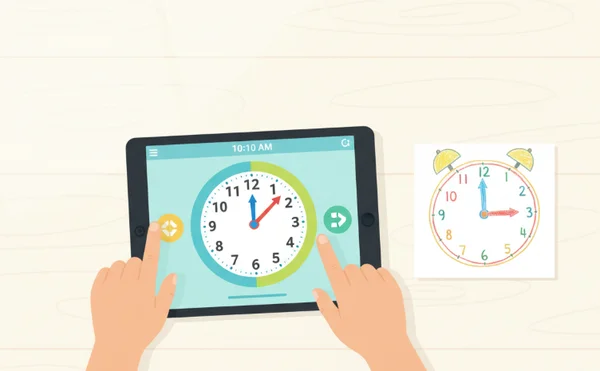
자녀가 종이 접시 시계에 시간을 설정한 후, 그들이 스스로 "테스트"하도록 하세요. 시각적 시계 시뮬레이션으로 가서 디지털 바늘을 물리적 공예와 일치하도록 드래그할 수 있습니다. 우리 도구는 화면 상단에 즉시 디지털 시간을 표시합니다.
디지털 시간이 그들이 생각한 것과 일치하면 자신감이 향상됩니다! 일치하지 않으면 바늘이 정확히 어디에 있어야 하는지 볼 수 있습니다. 우리 사이트의 "임의 시간" 버튼도 이것에 완벽합니다. 버튼을 클릭하여 임의의 시간을 얻은 다음 아이에게 종이 시계에서 정확히 그 시간을 재현하도록 요청하세요. 물리적 세계와 디지털 세계 사이의 이 오고 감은 아이들을 위한 시계 읽기 개념을 기억에 남는 방식으로 강화합니다.
디지털 통합이 있는 인쇄 가능한 워크시트
많은 교육자들이 실습형 시간 워크시트를 사용하여 진행 상황을 추적합니다. 이것들은 일반적으로 학생들이 바늘을 그려야 하는 여러 개의 빈 시계 얼굴을 특징으로 합니다. 이것들을 더 재미있게 만들기 위해 디지털 연습과 통합하세요. 학생이 웹사이트에서 "디지털 시간 숨기기" 기능을 사용하여 자신에게 도전하게 하세요.
- 워크시트를 보고 필요한 시간을 찾습니다(예: 오전 4시 30분).
- 온라인 아날로그 시계를 사용하여 바늘을 오전 4시 30분으로 설정합니다.
- 화면에 표시된 것과 정확히 일치하도록 워크시트에 바늘을 그립니다.
- 웹사이트에서 "디지털 시간 표시"를 클릭하여 정답인지 확인합니다.
이 방법은 전통적인 워크시트에서 종종 발생하는 좌절을 방지합니다. 종이를 채점하기 위해 선생님을 기다리는 대신, 학생은 즉각적인 만족을 얻습니다. 이것은 단독 작업을 대화형 게임으로 변환하여 사용 가능한 가장 효과적인 시간 읽기 게임 중 하나가 됩니다.
공예, 게임, 디지털 플레이가 결합될 때 자녀가 시간 읽기의 마법을 푸는 것을 지켜보는 것은 순수한 기쁨입니다! 아이에게 시간 읽기를 가르치는 것은 인내, 창의성, 그리고 올바른 도구가 필요한 여정입니다. 아날로그 시계 공예로 시작함으로써 어린이들이 물리적 세계를 이해하는 데 필요한 촉각적 기반을 제공합니다.
보물 찾기와 일일 일정을 포함시킴으로써 그 지식에 실제 세계적 의미를 부여합니다. 마지막으로 디지털 도구를 통합함으로써 아이들이 참여하도록 유지하는 즉각적인 피드백과 대화형 재미를 제공합니다. 모든 아이가 다른 속도로 배운다는 것을 기억하세요. 어떤 아이들은 종이 고정핀과 자르기를 좋아할 것이고, 다른 아이들은 태블릿에서 버튼을 클릭하는 데 모든 시간을 보내고 싶어할 것입니다. 핵심은 시간 개념과 상호 작용하는 다양한 방법을 제공하는 것입니다.
오늘 거실이나 교실을 재미있는 시계 놀이터로 바꿔보세요. 종이 시계 만들기로 시작하고, 그런 다음 무료 도구를 사용해 보세요 자녀가 얼마나 쉽게 시간의 바늘을 마스터할 수 있는지 확인하세요. 약간의 공예와 많은 재미로, 자녀는 금방 시간 읽기 전문가가 될 것입니다!
핵심 요약
공예로 시간 가르치기에 가장 좋은 나이는 언제인가요?
대부분의 교육자들은 5세 또는 6세 정도, 즉 유치원 또는 1학년에 해당하는 나이부터 시작할 것을 제안합니다. 이 나이에 어린이들은 아날로그 시계 공예를 도와줄 정교한 운동 기술을 갖추고 있으며 기본 숫자 순서를 이해하기 시작합니다. 그러나 우리의 대화형 시계에서 파란색과 빨간색 바늘에 대해 간단히 이야기하여 그들을 모양에 익숙하게 함으로써 더 일찍 시작할 수도 있습니다.
이 활동에 적절한 화면 시간은 얼마인가요?
우리는 균형 잡힌 접근을 믿습니다. 물리적 활동에 대한 "확인"으로 디지털 도구를 10-15분 사용하는 것은 매우 효과적입니다. 우리 도구는 교육에 초점을 맞추고 산만한 광고가 없기 때문에 매우 고품질의 화면 시간입니다. 짧은 세션이 큰 개선으로 이어지는 것을 빠르게 볼 것입니다.
이 활동들이 시간 개념에 어려움을 겪는 어린이들에게 도움이 될 수 있나요?
네! 어려움을 겪는 어린이들은 종종 전통적인 방법이 너무 추상적이라고 느낍니다. 다감각적 접근—시계 바늘을 보고, 만지고, 움직이는 것—은 개념을 그들의 뇌에 "고정"하는 데 도움이 됩니다. 대화형 도구가 제공하는 즉각적인 피드백은 특히 실수하는 것에 대해 불안을 느끼는 어린이들에게 매우 도움이 됩니다. 그들은 비공개로 즉시 자신을 수정할 수 있습니다.
더 많은 인쇄 가능한 시계 템플릿을 어디에서 찾을 수 있나요?
많은 교육 웹사이트에서 시계 얼굴에 대한 무료 PDF 다운로드를 제공합니다. 그러나 화려한 것은 필요 없습니다! 간단한 흰색 종이 접시와 색종이 두 장이 종종 최고의 도구입니다. 아날로그 시계 참조 가이드를 시각적 체크리스트로 사용하여 접착하기 전에 숫자와 바늘이 올바르게 배치되었는지 확인할 수 있습니다.
시간 읽기 활동을 얼마나 자주 연습해야 하나요?
지속 시간보다 일관성이 더 중요합니다. 매일 5분 연습하는 것이 일주일에 한 번 1시간 연습하는 것보다 훨씬 낫습니다. 매일 아침 식사나 취침 시간 루틴에 "시간 도전"을 포함시켜 보세요. 기술을 날카롭게 유지하기 위해 매일 한 번 임의 시간 기능을 사용하고 놀라운 진전을 볼 것입니다!