What Is an Analog Clock? Kids' Fun Guide to Time!
Tick-tock, what's on the clock? Has your child ever looked at a round clock with hands and felt a little confused? You're not alone! In a world filled with digital numbers on phones and tablets, the classic clock face can seem like a mystery. Learning to tell time on an analog clock is a super fun and important skill. It helps kids understand time in a whole new way.
Learning to read an analog clock doesn't have to be a chore. In fact, it can be an exciting adventure. This guide is a kid-friendly journey into the world of analog clocks. We'll discover their secrets, meet their different parts, and learn how they work together. We believe that the best way to learn is by doing.
Get ready to turn confusion into confidence! By the end of this guide, you and your child will have all the knowledge you need to start reading a clock. And when you're ready to put those new skills to the test, you can practice with our clock in our Fun Clock Playground.
What Makes an Analog Clock Tick? The Fun Parts!
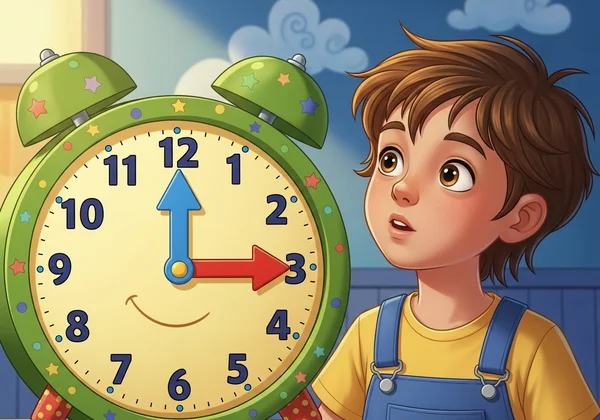
Before we can read the time, we need to meet the team! An analog clock is like a little machine with a few key players working together. Understanding what each part does is the first step to becoming a time-telling champion. Let’s break down the face of the clock into simple, fun parts.
Meet the Blue Hour Hand: The Slowpoke!
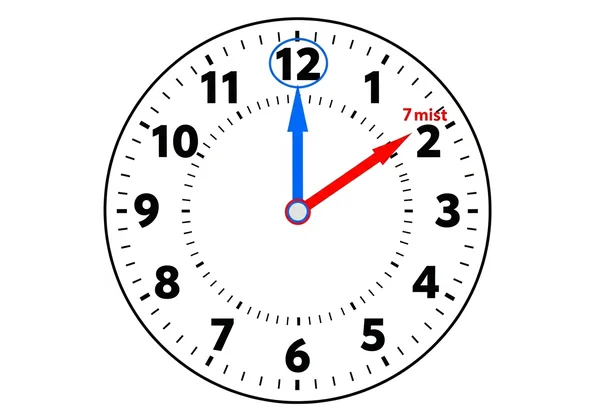
First up is the short, sturdy hand. On our special learning clock, this is the blue hand. This is the hour hand. Think of it as the slowpoke of the clock family. It moves very, very slowly, taking a full 12 hours to travel all the way around the clock face just once.
Its job is simple but important: it points to the big numbers (1 through 12) to tell us what hour it is. Because it moves so slowly, it gives us the main piece of information we need to know about the time. When you want to know the hour, always look for this short, slow hand first!
Say Hello to the Red Minute Hand: The Speedy One!
Next, meet the long, thin hand. On our clock, this is the red hand. This is the minute hand. If the hour hand is the slowpoke, the minute hand is the speedy one! It moves much faster, zipping all the way around the clock face once every hour.
The minute hand's job is to tell us how many minutes have passed in the current hour. It points to the little dashes around the clock edge. There are 60 dashes—one for each minute. This tells the exact time beyond just the hour.
Numbers, Dashes, & The Clock Face: Our Time Map
The clock face is the background where all the action happens. Think of it as a map for time. It has a few important landmarks you need to know:
- The Big Numbers (1-12): These are the most obvious landmarks. They mark the hours. The blue hour hand uses these numbers as its main guide.
- The Little Dashes: Between each big number, you'll see four smaller dashes. Including the mark at the big number, there are 60 dashes in total around the clock. The red minute hand points to these to show the exact minute.
- Counting by Fives: Here’s a secret trick! The big numbers also help the minute hand. When the minute hand points to the "1", it means 5 minutes have passed. When it points to the "2", it's 10 minutes. Each number represents another 5 minutes, all the way up to 60!
Now that we know all the parts, we're ready for the next step: learning how to read the map!
Reading an Analog Clock: Your First Fun Steps!
You’ve met the hands and explored the clock face. Great job! Now it's time to put all that knowledge together. Reading an analog clock is like solving a simple, two-part puzzle. You just need to know which clue to look for first. Let's walk through it step-by-step.
Finding the Hour First: What the Blue Hand Tells Us
Always start with the short blue hour hand. That's rule one! It gives you the hour.
Ask yourself this question: What number is the blue hand pointing at, or which number did it just pass?
If the blue hand is pointing directly at the 9, the hour is 9. If it's a little bit past the 9 but not yet at the 10, the hour is still 9. The hour only changes when the hand officially passes the next big number. This is the easiest part, and once you have the hour, you're already halfway there!
Counting the Minutes: The Red Hand's Big Job
Once you know the hour, it's time to find the exact minutes. For this, we look at the long red minute hand. This is where counting by fives becomes your superpower!
Start at the top of the clock (the 12) which is your "zero" point. Then, follow the red hand and count by fives for each big number it has passed:
- If it points to the 1, it’s 5 minutes past the hour.
- If it points to the 2, it’s 10 minutes past the hour.
- If it points to the 3, it’s 15 minutes past (also called a quarter past!).
- If it points to the 6, it’s 30 minutes past (also called half past!).
Continue counting all the way around the clock. This might seem tricky at first, but with a little practice, it becomes second nature.
Putting It All Together: Let's Practice with Our Interactive Clock!
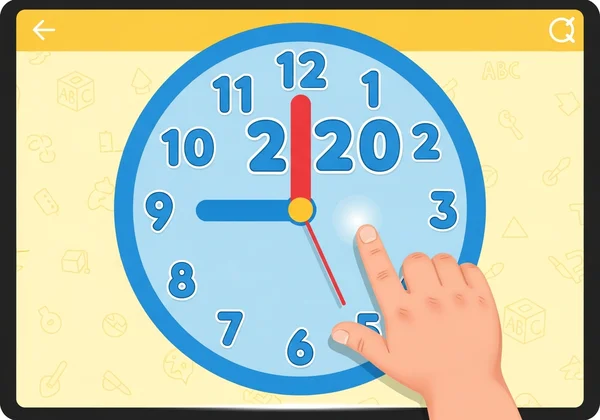
Now, let's combine the two steps. Imagine the short blue hand is just past the 2, and the long red hand is pointing at the 4.
- Find the Hour: The blue hand passed the 2, so the hour is 2.
- Find the Minutes: The red hand is on the 4. Let's count by fives: 5, 10, 15, 20. It's 20 minutes.
So, the time is 2:20! See? You did it! Reading about it is one thing, but the best way to truly master telling time is to get hands-on. This is where our interactive learning clock becomes your best friend. You can move the hands yourself and see the digital time change instantly. You can even challenge yourself with random times.
Why Learning Analog Clocks is Super Important (and Fun!)
In an age of smartphones and digital displays, you might wonder, "Why do we still need to learn how to read an analog clock?" It's a great question! The truth is, learning this skill does more than just tell time. It builds powerful brain skills and helps children understand the world around them.
More Than Just Time: Building Big Brain Skills
Reading an analog clock gives a kid's brain a great workout. It builds important skills for math, science, and daily life.
-
Understanding Fractions: Phrases like "half past" and "a quarter to" are children's first real-world introduction to concepts like halves and quarters.
-
Skip Counting: Counting the minutes by fives is excellent practice for multiplication and mental math.
-
Spatial Reasoning: Understanding the position of the hands and their relationship to each other builds spatial awareness.
-
Concept of Time: An analog clock provides a visual representation of time passing. Kids can see how much time is left until lunch or what 30 minutes really feels like. This makes an abstract concept much more concrete.
Analog Clocks Are Everywhere! A Real-World Skill
Even today, analog clocks are all around us. You'll find them in classrooms, kitchens, and train stations. Reading an analog clock is a practical life skill. It helps a child feel confident and independent whenever they see one. This timeless skill connects them to history and prepares them for the future.
Ready to Be a Time-Telling Master with Your Own Analog Clock?
We've explored the entire world of the analog clock, from its friendly blue and red hands to the numbers on its face. You now know that reading a clock is a simple two-step process: find the hour first, then count the minutes. Most importantly, you know that learning this skill is a fantastic way to build a smarter brain!
Remember, every expert was once a beginner. The key to becoming a confident time-teller is practice, and the best practice is fun! Don't just read about telling time—start doing it.
Turn learning into a game. Challenge your child to set different times, guess random times, and become the boss of the clock. Head over to our Fun Clock Playground and start your hands-on adventure today. It's free, easy to use, and the perfect place to become a true time master!
Your Questions About Analog Clocks Answered!
What is the difference between an analog and digital clock?
An analog clock shows time using moving hands (an hour hand and a minute hand) on a circular dial with numbers 1 through 12. A digital clock displays the time directly with numbers, for example, "10:30." Analog clocks are great for visualizing the passage of time and understanding concepts like "before" and "after" the hour.
How do you explain the hour and minute hand to a child?
The best way is to use simple analogies. Explain that the short hour hand is the "slowpoke." It moves very slowly from one big number to the next. The long minute hand is the "speedy one" because it zips all the way around the clock every hour. Using colors, like the blue and red hands on our clock, also helps children tell them apart easily.
What age should a child be able to read an analog clock?
While every child develops at their own pace, most children begin learning to tell time between the ages of 6 and 8. Typically, they start by learning the hour and half-hour marks. Next, they progress to reading time to the nearest five minutes, and then to the exact minute. Interactive tools can make this learning process fun and accessible even earlier.
Are analog clocks better for learning time?
Many educators and child development experts agree that analog clocks are better for initially teaching the concept of time. The visual, circular layout helps children understand that time is continuous and cyclical. It makes abstract ideas like "half an hour" concrete. Using an educational clock tool that is interactive and fun makes this visual learning even more powerful and engaging for kids.